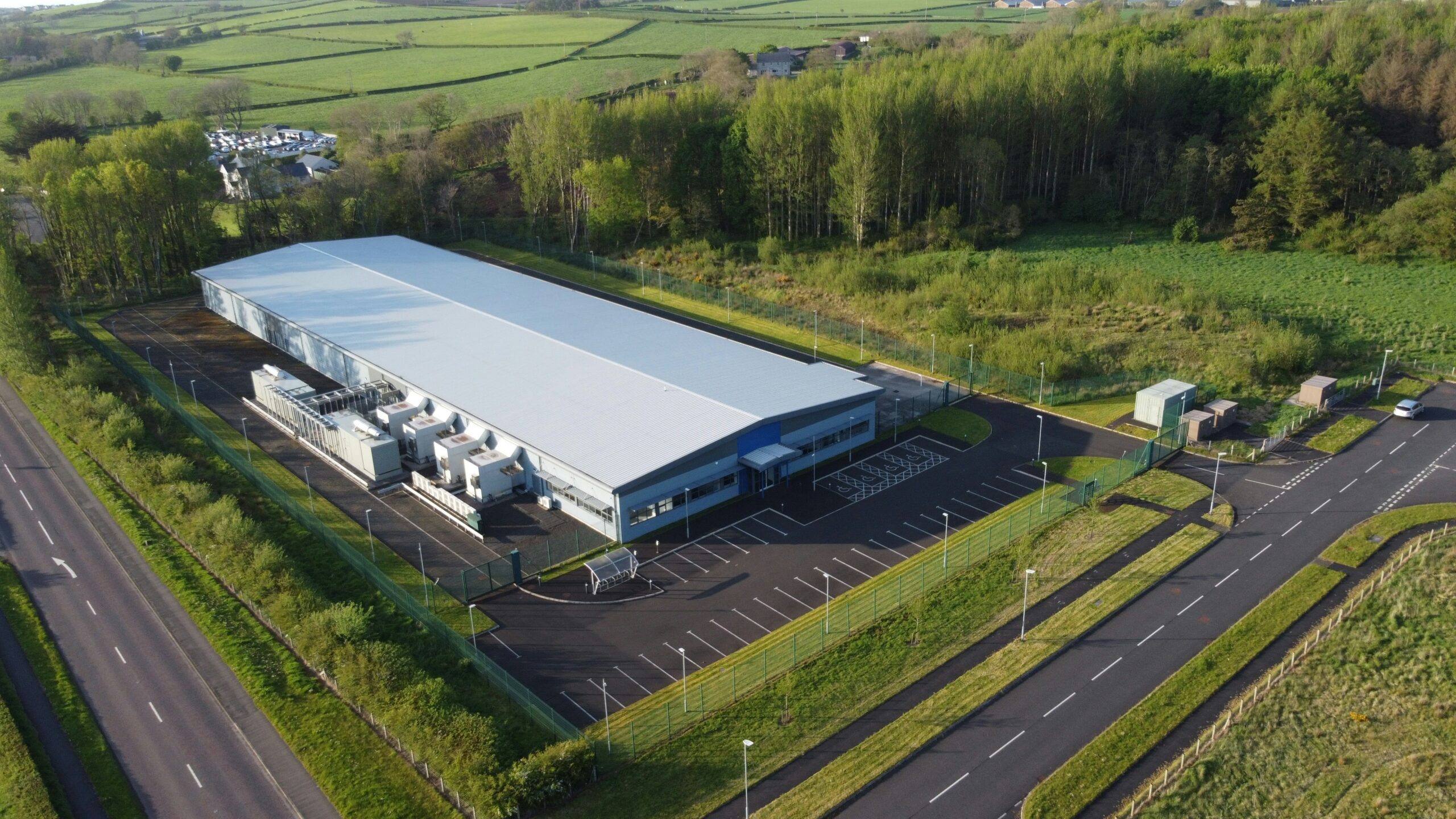
Developers Going Green But Foregoing LEED Certification

Attendees at the Office & Industrial Market Update and 2013 Forecast Summit presented by The Colorado Real Estate Journal and Otten, Johnson, Robinson, Neff & Ragonetti on September 6 heard from a panel of general contractors who reported that developers of industrial properties frequently choose to meet LEED standards without seeking the official LEED certification, because the certification process adds $50,000 to $100,000 to the cost of the building.

Along those same lines, a September 5 Wall Street Journal article focused on a new apartment building to be built in Manhattan by a developer who was one of the first to build a LEED-certified skyscraper a decade ago. For its new building, the developer, the Durst Organization, plans to incorporate “green” features, but will not seek LEED certification. The developer says it wants the chance to be more innovative and not be bound by LEED’s checklist of features.

LEED has been criticized by others for being too lax in its standards, and for certifying buildings before they are actually in operation.

Meanwhile, the U.S. Green Building Council, which oversees LEED standards and certification, has said it is working on updated standards (LEED v4). Members of the Council are currently scheduled to vote on the updated standards in June 2013. According to the Council, “LEED v4 focuses on increasing technical stringency from past versions and developing new requirements for project types such as data centers, warehouse & distribution centers, hotels/motels, existing schools, existing retail, and mid-rise residential.”

It remains to be seen whether changes to the LEED standards will bring developers back into the LEED fold.

Denver Announces Improvements to Development Services Web Offerings

The City and County of Denver recently announced several improvements to the website for Denver’s Development Services department.  The goals of the enhanced website are to provide residents and developers with more efficient online access to the City’s review, permitting and inspection processes and newly assembled guides about the permitting and approval requirements for commercial projects.  For example, owners, contractors an developers can quickly browse all of the City requirements for new construction, tenant finish/remodel, renovation, demolition and signage components of their projects.  Read the press release announcing the website improvements here and visit the updated Development Services website here.

Colorado Foreclosure Initiative Abandoned; Proponents to Push for Legislative Change Instead

As we noted in a previous post, critics of Colorado’s foreclosure process have been pursuing various avenues to reform parts of that process.  They have been particularly focused on the “qualified holder” provision of Colorado statutes, which allows the foreclosing lender to state that it is the owner of the deed of trust being foreclosed, without producing the original documents to prove ownership.  A bill that would have amended the statute to require documentation died in the Colorado legislature earlier this year.  Proponents of the bill then started working on a ballot initiative that, if passed by voters in November’s general election, would have amended the Colorado Constitution to address this issue.

Those proponents recently announced they are not going to continue to pursue the ballot initiative, and will instead return to their original approach of pushing for legislative changes to the foreclosure statute.  According to The Denver Post, the campaign director for the Colorado Progressive Coalition, which had been leading the charge, said she believes the group has built the support it needs to pass the change legislatively.  A new bill is expected to be introduced in the next legislative session, which will begin in January.

Colorado Overhauls Record Keeping Requirements for Property Owners' Associations

The Colorado legislature recently adopted a bill amending the Colorado Common Interest Ownership Act (CCIOA).   House Bill 12-1237, which currently awaits Governor Hickenlooper’s signature, overhauls the record keeping requirements imposed upon Colorado’s property owners’ associations under CCIOA.   Generally speaking, the requirements of this bill are more detailed than CCIOA’s old provisions on record keeping, and speak to topics previously covered such as financial records and records of member and board meetings.  In addition, the bill addresses additional types of records and clarifies which records must be provided and must not be provided to members upon request, and which records can, at the association’s option, be withheld. 

Some of the new types of records specifically addressed in the bill include records related to construction defects.  The bill requires that property owners’ associations keep records of claims for construction defects and amounts received pursuant to settlement of those claims and that those records be made available to members upon request.  The bill also requires that when action is taken by the board of directors without a meeting, the property owners’ association maintain all written communications among the board members that are directly related to those actions, which presumably includes emails.  These records must be provided to members upon request.

The records that the board of directors may withhold, at its option, include, among other things, communications with legal counsel that are otherwise protected by the attorney-client privilege, records related to an executive session of the board of directors and records related to transactions to purchase goods or services that are currently under negotiation.  Those items that must be withheld from members include personal information related to employees or members (salary, medical information, bank account information, phone numbers, email addresses, drivers license numbers and social security numbers).  Because email communication is so prevalent today, property owners’ associations will need to take precautions not to disclose email addresses of its members under the new bill.  Note, however, the email addresses of board members must be provided to any owner who requests the information. 

Assuming this bill is signed by Governor Hickenlooper (and not challenged by referendum), its provisions will take effect January 1, 2013. 

Colorado Apartment Vacancy/Rental Rates Suggest Market Optimism

This article in today's Denver Post discusses how, despite some regional variation in vacancy rates and rents, the statewide trends suggest optimism among property managers and landlords concerning future demand. 

The recent uptick in multi-family housing construction in some parts of Colorado indicates that developers may be feeling the same way. 

It will be interesting to watch whether this results in sustained multi-family growth. 


Construction Contract Legislation Fails in Committee

To update our previous post, Colorado Senate Bill 12-181 regarding construction contracts failed today in the Senate Business, Labor and Technology Committee by a vote of 6-1.

Proposed Legislation Would Profoundly Impact Colorado Construction Contracts

A last minute bill has been introduced in the Colorado Senate.   Colorado Senate Bill 12-181, introduced last week by State Senator Lois Tochtrop, proposes new requirements related to construction projects in Colorado.  These proposed changes are not favorable to property owners in Colorado and will limit the ability of property owners to negotiate business terms in their construction contracts.  SB 12-181 is set for a hearing before the Senate Business, Labor and Technology Committee on Wednesday, May 2, 2012. 

SB 12-181 applies to “Building and Construction Contracts” which is defined as any contract subject to Title 38, Article 22 of the Colorado Revised Statutes, Colorado’s mechanics’ lien law.  SB 12-181 contains the following points:

  • Colorado Law Must Apply.  Any provision in a Building or Construction Contract for work to be performed in Colorado that makes the contract subject to the laws of another state or contains a dispute resolution provision governed by the laws of another state, is void and unenforceable. 
  • Parties Cannot Contract Around Colorado Mechanics’ Lien Law.  Any provision in a Building and Construction Contract that requires a contractor or subcontractor to waive its right to file a mechanics’ lien or claim against a payment bond prior to being paid is void and unenforceable.
  • Payment to Subcontractors and Suppliers Required Within 7 Days.  All principals, general contractors and subcontractors must pay their subcontractors and material suppliers within seven days of receipt of services.
  • Mandatory Interest Penalty; Costs and Attorney Fees Award.  A 1.5% monthly interest penalty applies to all unpaid amounts, and subcontractors and suppliers who successfully sue to collect this interest penalty will also be entitled to collect their costs of suit, including attorney fees.
  • Monthly Progress Payments Required; Retainage Amounts Capped.  Property owners or parties responsible for payment must make monthly progress payments to the general contractor unless the Building and Construction Contract specifies otherwise, and owners or payment parties may only reserve as retainage a maximum of 5% of each payment.
  • Change Orders.  General contractors must submit the costs of any change orders to owners for payment within 30 days of the change order.  Owners or payment parties will be required to pay at least 50% of any disputed change order amounts.

DOJ Signals Shift on Medical Marijuana

Police Line.jpgIn October of 2009, the United States Department of Justice issued a memorandum (the "Ogden Memo") stating that scarce federal resources should not be focused "on individuals whose actions are in clear and unambiguous compliance with existing state laws providing for the medical use of marijuana." The Ogden Memo also emphasized the federal commitment to enforcing federal drug laws and that marijuana remained illegal, but it was widely perceived as marking a significant decrease in the risk of federal criminal prosecution of state-sanctioned medical marijuana activities. This perception was arguably the catalyst that sparked the rapid development of Colorado's commercial medical marijuana industry, which started toward the end of 2009.

In reaction to the development of the industry, the State of Colorado has spent the last eighteen months developing and implementing the most comprehensive medical marijuana regulatory system in the country. Operating under this regime is quite onerous for the regulated businesses, but the extensive amount of oversight involved, as well as the resulting elimination of more "amateur" businesses, has also tended to increase the perceived legitimacy of the industry. In turn, the development and institutionalization of medical marijuana as a legitimate, regulated industry has had a significant impact on real estate in Colorado, perhaps most notably by creating new demand for warehouse and retail space.

However, largely in reaction to the increase in the scope of the commercial cultivation, sale and distribution of medical marijuana, the DOJ issued a new memorandum in June of this year. It stated that the Ogden Memo was intended to refer to sick individuals and the individuals who care for them, and not to commercial medical marijuana operations. As such, the new memorandum stated that persons "in the business of cultivating, selling or distributing marijuana, and those who knowingly facilitate such activities," are in violation of federal criminal drug laws. Those who "knowingly facilitate such activities" could include, for example, landlords that lease property to persons engaged in these illegal activities. The new memorandum also made clear that these activities should not be considered "shielded" by the Ogden Memo, and are properly the subject of federal prosecution.

Thus far, the federal government's hands-off approach in Colorado has not changed. However, the new policy makes explicit that the participants in Colorado's medical marijuana industry face a very real risk of federal criminal prosecution. This includes those who "knowingly facilitate" the business of cultivating, selling or distributing marijuana. Especially given the recent federal pronouncement, it is important for property owners to understand and recognize the risks associated with their participation in the medical marijuana industry. Though federal authorities have not clamped down on Colorado's medical marijuana industry to date, landlords of medical marijuana businesses could face federal criminal liability (for example, through "aiding and abetting" federal criminal statutes), and their properties could be subject to forfeiture.

Photo by Tony Webster (flickr)

Will FasTracks Shortfall Impact Denver Area TODs?

Light Rail with DevelopmentRecent stories in the business section of the Denver Post have featured real estate development around light rail stations.  First, there was the story of the Denver Federal Center, and a few days later an article on the Denver Design District.  This appears to be a continuation of the theme that transportation will drive future development in Denver.  As reported in an earlier post, Regional Transportation District is taking a more flexible approach with transit oriented developments.  All of this seems like great news.  However, as reported in today’s Denver Post, FasTracks is at least $2 billion short in funding, and RTD’s board voted 13-1 against placing a sales tax increase on the November ballot.  It is not surprising that a sales tax increase in this climate is not feasible politically.   Given that many of the newly planned developments in the Denver area seem to be linked to transit, this shortfall in FasTracks funding may slow down some of it.    However, given the general state of the economy, not all of it may come to fruition that quickly anyway.

Photo by vxla (Flicker)


Connected Urban Development - Rocky Mountain Land Use Institute

Last week I attended the 20th annual Rocky Mountain Land Land Use Institute conference at the University of Denver Sturm College of Law.  Nicola Villa with Cisco was the Keynote Speaker on Friday morning.  Mr. Villa works with the Connected Urban Development ("CUD") program across the world in cities like Amsterdam, San Francisco and Seoul.

Launched in 2006, CUD was born out of the the Clinton Global initiative intended to help lower carbon emissions across the world.  CUD's goal of reduced carbon emission is achieved through high connectivity - broadband, wireless and "smart urban structures."  CUD works by changing how cities deliver services, how residents work and commute and how real estate resources are used and managed.

CUD continues to evolve.  Last year, the next phase of the CUD was announced at the Shanghai World Expo.  It's called SMART 2020: Cities and Regions.  The program is administered by a non-governmental organization and seeks to help cities collaborate with each other and the business community to develop a global industry platform for information technology in the sustainable city.

At least 12 successful pilot projects in participating cities have demonstrated CUD's potential.  One important pilot project that could have far reaching implications for urban development is called the Smart Work Center ("SWC").  SWCs are structures located in residential areas that offer a highly connected professional work environment.  These centers are equipped with networking technology and collaboration tools, which allow users to connect to colleagues and customers.  Users from many different organizations share the SWC's resources.  This type of office sharing arrangement could reduce the need for centralized offices and other development in the heart of downtown areas in participating CUD cities.

Section Line Roads: Is There Statutory Authority for Them?

country road.jpgIn order to facilitate the settlement of the western United States in the nineteenth century, the federal government broke the land up into “townships” that were generally 36-square mile blocks.  Each township was then broken into “sections” of roughly one square mile, or 640 acres.  Each section was further divided into “quarter sections,” and further into “quarter quarter sections” of 40 acres each.

Sometimes when we are working on acquisitions or financings of raw land, we encounter roads that follow the section lines, usually 30 feet on either side of the line.  There is often no deed, easement or dedication for these roads, and the question comes up as to whether there is some statutory basis for these roads.  If there is no statutory basis, then we need inquire about whether there is a prescriptive easement for these roads.  (See the note below on prescriptive easements.)

So, is there statutory authority for those roads?  There isn’t now, but there used to be. 

In 1885, the Colorado General Assembly passed a law [PDF] that allowed commissioners of a county, by an order at a regular meeting, to declare any section or township line “on the public domain” to be a public highway.  As pointed out by H. Keith Corey of Grand Junction (see part (3) of his paper), this statute was repealed in 1953, but its repeal did not remove any roads that were in place prior to repeal.  Before repeal, El Paso, Weld and Mesa Counties passed resolutions pursuant to this statute.  See Book 571, Page 55[PDF] of the El Paso County real property records and Book 86, Page 273 [PDF] of the Weld County real property records.

If you are looking at land that has one of these roads located on a section line, and the county passed a resolution pursuant to the 1885 statute before 1953, then you should assume that there is a public highway for the first 30 feet inside the section line.

Thanks to Ian Cortez of Ulteig Engineers, who brought this up at a surveying seminar, and to David Knapp at Land Title for sharing his experience on this issue.


NOTE:  Generally, a prescriptive easement arises when a party adversely uses property in the same manner as if it had an easement, and such use is continuous and uninterrupted for the period of prescription.  Almost every element of a presciptive easement is loaded with specific, and sometimes controversial, meaning, so the analysis needs to handled carefully.  Note that a prescriptive easement (and its cousin, adverse possession) usually cannot be established by private parties against governmental entities, so you probably can't make one of these public highways go away without the county's consent.

Photo by goingslo (flickr)

Generation Y Wants Urban Lifestyle

As discussed here by The Wall Street Journal, the vast majority of Generation Y, a larger demographic than baby boomers, wants an urban lifestyle.  Of those born between 1980 and the early 2000’s, 88% want to live in an urban setting rather than in traditional, suburban communities.  They want a pedestrian-friendly environment.  They also prefer smaller dwelling units with shared amenities to the suburban home with a large yard.

Of course, as this DenverUrbanism.com blog post suggests, as time goes on and Millennials start having their own children, their desires may change.

It will be interesting to see how this generation’s preferences impact urban and suburban residential markets.

Do Demographics Favor Downtown Office Markets?

Anton Troianovski had an interesting article in the Wall Street Journal on how downtown office markets are currently improving faster than suburban office markets.  In part, Troianovski observes, this may be based on the types of businesses that tend to be in the two markets (mortgage companies and home builders in suburban markets, while downtowns tend to be home to government offices and big banks).  

City Photo.jpgBut he also notes that a possible "secular shift is under way in the American workplace" because younger people want to work in downtown markets.  Downtown Denver is specifically mentioned in this article as a beneficiary of this trend.  Whether this trend continues as the job market solidifies over the coming months and years will be worth watching.

Photo by paul (dex) (flickr)

Trouble for Agricultural Tax Classifications?

A client recently raised concerns regarding a potential change in property tax assessment methodology that may be upcoming in the next Colorado state legislative session.  With revenues continuing to decline, local governments are seeking opportunities to capture property taxes from new sources.  The issue concerns residential property owners claiming an agricultural tax classification without having a bona fide agricultural operation on their land.

Colorado assessors classify real estate for property tax assessment purposes based on use, regardless of the underlying zoning designation.  Often, an agricultural classification results in a lower tax bill, because the actual value of agricultural land is based on its agricultural productive capacity.  A low productive capacity results in a low tax bill.    

HB10-1293, which became law last year, established the Land Assessment and Classification Task Force (the "Task Force").  The Task Force's nine members were charged with studying and evaluating assessment methodology for agricultural and residential properties and proposing statutory amendments to ensure that property is taxed in accordance with its actual use.  Under existing law, a residence on agricultural land is classified as residential, but the land is classified as agricultural.  

In October of this year, the Task Force released its Final Report.  In the Final Report, the Task Force agreed to focus its attention on a mixed residential/agricultural classification that would more accurately reflect the land's use.  The Task Force proposed four recommendations as follows:

1. For any parcel that is more than 2 acres in size, assess a maximum of 2 acres as residential, when the residence is not an integral part of the agricultural operation.

2. For any parcel that is less than 2 acres in size, assess that portion of the land not used for agricultural operations as residential.

3. Require the division of taxation to establish guidance on the definition of "integral to agricultural operations" with certain guiding principles.

4. Require members of the Task Force to include recommendations 1 through 3 on any legislation carried
forward by Task Force Members. 

Because any changes to the historical tax classification methodology could have significant long-range consequences, it will be important to monitor the legislature's interest and activity in this area.  I understand legislation on this matter supported by a number of Colorado counties has already been drafted.  Newspapers in Denver and Vail are already weighing in

Developing Green in Berthoud

Last month the Town of Berthoud, Colorado approved a mixed use development known as PrairieStar.  The development is anticipated to contain residential housing, a school, a research and development facility, an equestrian center, retail and business components, and, most notably, a 25 acre solar farm.  Developers of the project, Scott Sarbaugh and partner Richard McCabe, anticipate that PrairieStar will ultimately reach “net-zero energy consumption” status as a result of the large solar component. solar.jpg

In addition to the solar farm, the PrairieStar development includes many additional green touches including a community garden, an irrigation system using nonpotable water and an energy center for recharging electric cars.

In negotiations between developers and local municipalities, this type of sustainable (and sustainably marketed) project is likely to shed a different light on the developer.  Not only does it appear that sustainable developments like PrairieStar are particularly marketable to the end user, but in the current green climate they should be appealing to the local jurisdiction for entitlement approval.

Photo by Foreign and Commonwealth Office (Flickr)

Important Ground Work Being Laid for Future Development in Denver

Late last week, there were two news stories reporting on important developments for real estate in the Denver area.  Given the continued state of the economy and commercial real estate, I was pleased to see these reports.  While actual development resulting from these events may be some time off, important ground work is being laid now. 

First, the Denver Business Journal reports that Regional Transportation District (RTD) has adopted a more flexible policy for transit‑oriented developments (TOD), which are anticipated to be constructed along RTD’s FasTracks expansion.  Four pilot projects will be selected by RTD to test this new policy. 

According to the DBJ, RTD’s new policy:

  • gives developers more flexibility with regard parking requirements for TODs;
  • allows RTD to take a combination of up-front cash and a deferred payment (profits interest or revenue participation for instance) for the sale of property to a developer; and 
  • encourages cooperation with developers in an effort to bring in more federal and non‑profit funding. 

Second, the Denver Post reports that Greyhound is looking to move its bus station from its current location at 19th & Curtis Streets (right across the street from The Ritz‑Carlton) to somewhere in the metro area near a major RTD bus or rail station.  This certainly is good news for The Ritz‑Carlton and also for downtown.  This is a key area of downtown, in close proximity to the Arapahoe Square redevelopment area.  In fact, the boundaries of the Arapahoe Square urban renewal area are being redrawn to include the Greyhound site.  The redevelopment of the Greyhound site could have a tremendous impact on the central part of downtown, and with its inclusion in an urban renewal area, the economics of such a redevelopment might actually make sense sooner rather than later.

I am a firm believer that being proactive during the downturn will mean we are better poised to be one of the first markets to really see a rebound.  It is good to see RTD, DURA and others making decisions today that will hopefully attract new development to Denver when the market starts its recovery. 

Urban Renewal Authority Voted Down, But Why

Residents of the northern Douglas County City of Castle Pines North, or Castle Pines as it's now known, voted on Tuesday to abolish the City's recently established urban renewal authority.  The yes votes on Question 300 outnumbered the no votes by almost 2 to 1.  In abolishing the City's urban renewal authority, residents decided not to grant City Council and the urban renewal authority - here one and the same body - the urban renewal powers granted to such authorities by Colorado's urban renewal laws (31-25-101, C.R.S.), including the ability to capture and direct to the construction of new public improvements incremental tax revenues created by virtue of new or redeveloped portions of the City.  So, why did Castle Pines' residents reject the authority  I've got some ideas, but first a little background on urban renewal. 

Urban renewal laws have been on the books for more many years, and the authorities created under the laws have successfully implemented numerous urban renewal projects across Colorado. The Denver Urban Renewal Authority is just one such example.  Urban renewal laws grant urban renewal authorities the power to issue bonds to pay for qualifying elements of an urban renewal project, which typically consists of public streets, drainage improvements, sewer lines and other public infrastructure, but in any event, improvements that are intended to eliminate blight.  The urban renewal authority captures the incremental property and sales tax generated on redeveloped property (for a maximum period of 20 years), calculated as the difference of such taxes before and after developing the property.

Urban renewal projects are permitted, as an initial matter, only within areas where an urban renewal plan has been adopted by the municipality containing the urban renewal authority.  To establish an urban renewal plan for a particular area, the municipality must first determine that the area is "blighted."  It is this determination of "blight" where residents often run into issues. 

I believe the residents of Castle Pines didn't like their community being labeled as blighted, as most people don't like to have their property labeled as blighted.  Unfortunately, the urban renewal law requires a finding of "blight", based on a number of indicia as a prerequisite to establishing an urban renewal authority, notwithstanding that many of the indicia don't fall into the category of conditions most people associate with blight - like faulty lot layout, defective title conditions, unusual topography and inadequate street layout.  

Also, I believe the residents of Castle Pines thought the incremental tax dollars captured by the urban renewal authority amounted to a tax increase.  With or without an urban renewal authority, the incremental taxes generated by development are collected by the government.  But, the rationale behind the urban renewal law is that such increment would not be available if the development did not occur.  In other words, the development enabled by public financing of a portion of the public improvements would not have occurred, and therefore the increment would not be available, but for the urban renewal's ability to capture the increment.  In sum, the urban renewal authority is not responsible for tax increases, it merely uses the increased taxes collected by virtue of development to encourage development.  

Finally, I believe the residents may have thought "urban renewal" should be relegated exclusively to urban areas.

The real debate here should not be focused on whether a community contains indicia of blight or if the development is located in an urban area, but instead on specifically when and where it is appropriate to use tax increment financing to stimulate development, if at all.  If the debate does not focus on these issues, the public will continue to get lost in the meaningless distinction between the practical and legal interpretations of "blight" and "urban" under the urban renewal law.  Urban renewal laws could be easily reconstituted to address specifically when and where tax increment financing is appropriate, and I think they should be.


Colorado Supreme Court: Liberal Rules for Petitions and Admission of Evidence in Condemnation Cases.

The Colorado Supreme Court’s October 18, 2010 decision in Bly v. Story clarifies two issues with respect to condemnation proceedings in Colorado.  Bly involved a private party’s condemnation of an easement for a private way of necessity over a neighbor’s driveway.  The court, construing C.R.S. § 38-1-102(1), held that a metes and bounds legal description and specification of the particular purpose of the condemnation is not required in a condemnation petition.  Applied to the facts, the court found that a “general description,” along with a map that made the location of the proposed easement clear, was sufficient.  With respect to the proposed use, the court found that, for a private condemnation, mere recitation of any of the purposes listed in C.R.S. § 38-1-102(3) is sufficient.

Though this suggests that the rules for the sufficiency of driveway.jpgcondemnation petitions are fairly liberal, in Bly, a metes and bounds description, and a more detailed explanation of the nature of the proposed use of the easement were provided during discovery and/or in trial testimony.  Accordingly, while a somewhat vague petition may survive a motion to dismiss, condemnors would probably be well-advised to include more specifics in their petitions, if possible, and such information should definitely be supplied at some point during the course of the proceeding. 

Bly also addressed the admissibility of valuation evidence in a condemnation case.  The owners of the condemned land sought to introduce evidence of the cost of replacement of the driveway at issue, but the trial court refused to admit the evidence.  Even though the relationship between the evidence and the ultimate issue—the value of the easement—was tenuous, the Colorado Supreme Court concluded that the evidence should have been admitted.  However, in the circumstances, the court found that the failure to admit the evidence was harmless error. 

What is potentially important for future cases is the court’s clear statement of very liberal rules of admissibility of various forms of valuation evidence in a condemnation trial.  Depending on the facts of the case, some evidence may be entitled to more weight than others, but:

The evidentiary rules applicable to a trial for an award of just compensation are expansive, and all evidence relevant to the determination of market value of the condemned property is admissible.

Photo by normanack (Flickr)

A Good Time to Pursue Entitlements

Despite today’s economic reality, real estate developers should consider the unique opportunities of pursuing land use entitlements now.  While there is expense entailed in pursuing annexation, zoning, subdivision and related approvals, many jurisdictions are experiencing a significant drop in tax and fee revenues due to reduced development activity.  Accordingly, developers who are able to pursue land use entitlements during this difficult economy may find these jurisdictions more responsive to development proposals than they historically have been.

Although obtaining entitlements now may be “early” (end users or the ultimate land plan may be unknown), jurisdictions have been recognizing such circumstances and the need for flexible zoning that will allow for diverse development opportunities.  Planned Unit Development (PUD) or similar zoning can provide for standards that differ from the jurisdiction’s generally applicable zoning or technical standards to accommodate a variety of users.

Because there are fewer development applications being submitted today, applications may be processed in an abbreviated period of time.  And, as it traditionally may take years to process and obtain final approval of complete land use entitlements, there is no better time than the present to initiate that process.

Amendment 61 Will Have Serious Impact on Real Estate Development

end road work.jpg

If Colorado voters approve Amendment 61 in November, it is likely to eliminate the primary tool used by real estate developers to finance the installation of infrastructure in new developments. 

Amendment 61, together with its sister initiatives, Amendment 60 and Proposition 101, has recieved a lot of attention here in Colorado as we approach the November election.  While many believe that all three could have serious fiscal consequences for Colorado, it is Amendment 61 that is garnering some national attention.  The Wall Street Journal has recently reported on Amendment 61.  

Among other things, Amendment 61, if adopted, will:

  • expressly prohibit all types of borrowing by special districts other than bonded debt, including, for example, short‑term loans, certificates of participation, and lease-purchase transactions;
  • require voter approval for any bonded debt that is issued;
  • require that all bonded debt have a term and be repaid within 10 years; and
  • limit the amount of outstanding bonded debt to a total of 10% of the then-existing assessed values of the property within the special district’s boundaries.

 Real estate developers often form special districts for the purpose of installing and operating infrastructure for new projects.  The infrastructure must be installed before any development can occur, so either bonds are issued by the special district in order to fund the cost of installation of infrastructure, or the developer installs the infrastructure and the special district agrees to reimburse the developer with future bond proceeds or tax revenues.   Whether bonds are issued to pay the infrastructure costs directly from the outset or the special district enters into a reimbursement arrangement of some sort, the provisions of Amendment 61 would apply.  Amendment 61 would prohibit the reimbursement arrangements altogether, as such arrangements are essentially borrowing by the special district not in the form of bonds.  And, based on the timing of issuing bonds to raise capital to pay directly for the installation of infrastructure, the amount of bonds that cab be issued will be capped at 10% of the assessed value of the vacant land, which generally has a far lower value than the developed land. 

These and other issues with Amendment 61 have the attention of the local government community.  Because of the intersection between special districts and real estate, the real estate community should be paying attention too. 

.Photo by Daquella manera (flickr)